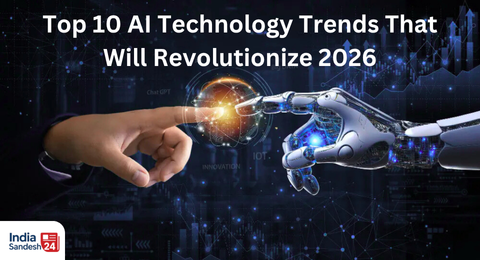
Artificial Intelligence (AI) is rapidly transforming the world, but with great power comes both incredible opportunities and serious challenges. As we look toward 2026, understanding the top AI technology trends is critical for businesses, creators, and everyday users who want to leverage innovation while navigating potential risks. Here’s a comprehensive look at the top 10 AI technology trends that will define 2026, highlighting both the promising breakthroughs and the concerns to watch out for.
Table of Contents
1. AI Automating Up to 70% of Everyday Tasks: Boon or Job Crisis?
AI automation promises to reduce repetitive workloads dramatically, freeing humans to focus on creativity and strategy. This could lead to unprecedented productivity gains across industries. However, the fear of widespread job displacement and the need for reskilling pose significant social and economic challenges.
2. AI-Powered Extended Reality (XR): Immersive Experiences with Hidden Risks
The fusion of AI with augmented and virtual reality is expected to create deeply immersive environments for gaming, training, and collaboration. This offers exciting possibilities for education and remote work. Yet, concerns over privacy, digital addiction, and blurring lines between reality and virtual worlds must be carefully managed.
3. Privacy-First AI with On-Device Processing: Protecting Data or Limiting Power?
Moving AI processing to local devices enhances user privacy and reduces reliance on cloud data centers. This is a positive shift towards securing personal information. On the downside, limited device power might restrict the complexity of AI applications available on smartphones and IoT gadgets.
4. AI Native Operating Systems: Seamless Assistance or Overdependence?
Operating systems fully integrated with AI will provide smarter, context-aware support enhancing user experience and security. However, overdependence on AI for everyday decision-making could reduce human critical thinking and create vulnerabilities if AI systems fail or are compromised.
5. Personalized AI in Healthcare: Lifesaving Advances and Ethical Dilemmas
AI will enable highly personalized diagnostics and treatment plans, improving patient outcomes and efficiency. But ethical questions arise regarding data ownership, consent, and potential biases in AI-powered healthcare solutions that could affect fairness and trust.
6. Pervasive Edge AI Chips: Real-Time Power vs. Energy Consumption
Specialized AI chips embedded in devices allow real-time, offline AI processing. This revolutionizes mobile intelligence and smart gadgets’ responsiveness. The challenge lies in balancing power consumption to maintain battery life while delivering high-performance AI.
7. AI-Powered Home Assistants: Convenience Meets Privacy Concerns
Advanced AI home assistants will better understand natural language and anticipate user needs, making life easier. Yet, their always-on nature raises valid fears about surveillance, data leaks, and unauthorized access to private conversations.
8. Full-Task AI Agents: Productivity Game Changers or Loss of Control?
AI agents capable of independently managing complex workflows could transform how we work, unlocking enormous efficiency gains. The risk is that users may lose control over important processes or encounter mistakes if AI actions are not transparent or adequately supervised.
9. Generative AI as Default Content Creator: Creativity Unleashed or Originality Lost?
Generative AI tools will make content creation faster and more accessible for writing, design, and video production. This democratizes creativity but also sparks debates about authenticity, copyright, and the potential decline in human originality.
10. Brain-Computer Interfaces (BCI) Powered by AI: Revolutionary or Intrusive?
AI-driven BCIs could let users control devices with their thoughts, aiding accessibility and expanding human capabilities. But this frontier raises serious concerns about mental privacy, data security, and ethical boundaries in human-machine integration.
Navigating the AI Future: Balance Innovation with Caution
Artificial intelligence holds the key to unlocking immense societal benefits in the near future. Yet, it is vital to approach these powerful technologies with a balanced perspective. Embracing AI’s strengths while prudently addressing privacy, ethical, and control challenges will shape a safer, more equitable 2026.
By staying informed and proactive, professionals in digital marketing, content creation, and technology development can harness these top AI trends to create impactful, user-centered solutions that enhance lives without compromising privacy or trust.